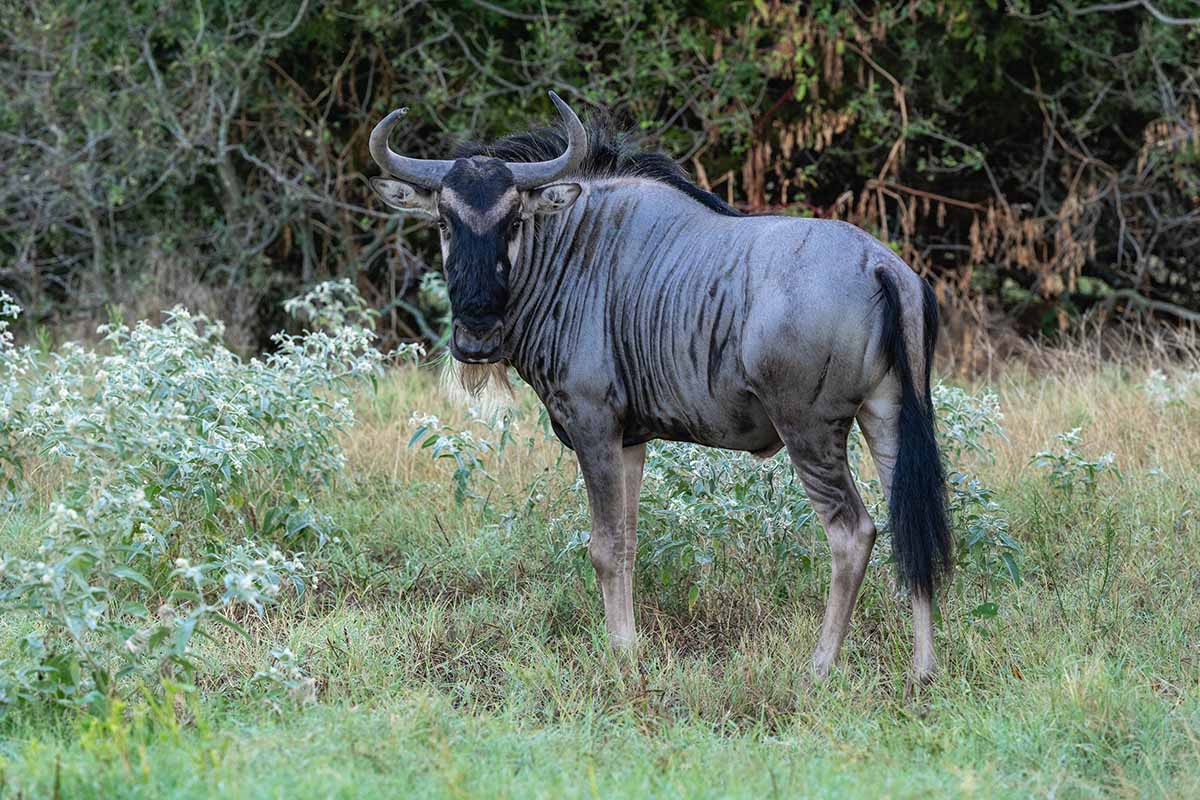
Native to the Serengeti plains of southeastern Africa - Gestation: about 8 – 8.5 months
The term ‘wildebeest’ itself is Dutch in origin. It means “wild beast” or “wild ox” in Afrikaans, and is a reflection of the settlers’ first impression of these animals when they encountered them around the 1700s in South Africa. The captivating wildebeests exhibit a remarkable reliance on water, a defining trait that greatly influences their migratory patterns. Unlike some savanna species that can subsist with minimal water, wildebeests necessitate regular access to water sources. This urgent need compels them to embark on their extraordinary migration, tirelessly seeking out areas abundant in water and fresh grazing. The wildebeest consumes a staggering 2.3 to 3.2 gallons of water every one to two days, emphasizing the crucial role water plays in their survival.
Tragically, a poignant study revealed that an average of 6,250 wildebeests meet a heartbreaking fate, drowning or being trampled while crossing the Mara River every year. Furthermore, an alarming 250,000 perish during the migration due to predation, starvation, disease, and exhaustion.