Bongo
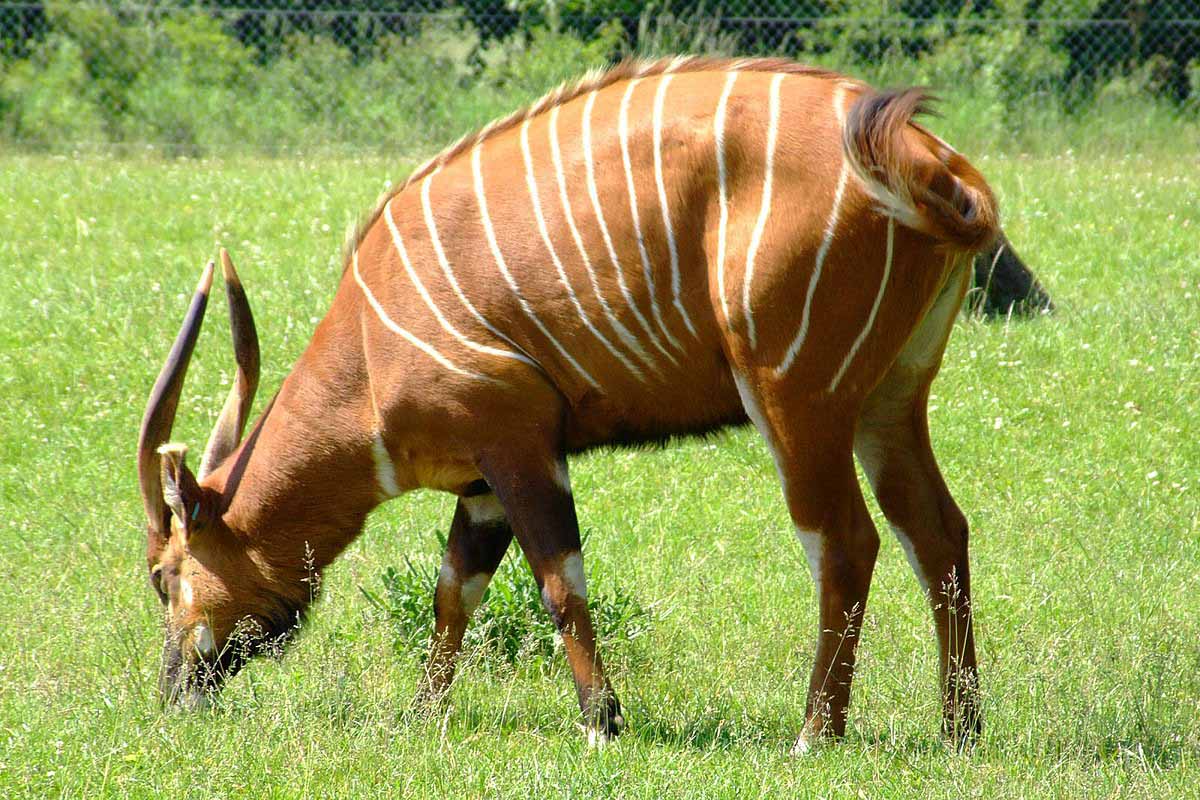
Bongos are some of the largest forest antelopes, celebrated for their striking chestnut brown coats adorned with elegant white stripes. What sets these remarkable creatures apart is that both males and females boast large, spiraled horns—the only species of spiral-horned antelope to exhibit this trait. These impressive horns can reach lengths of up to three feet.
Additionally, bongos engage in the fascinating behavior of wallowing in mud and then polishing their horns against trees, showcasing their distinct personalities. Shy and secretive, bongos are largely nocturnal and come alive at dawn and dusk, skillfully navigating the dense forest underbrush by elegantly maneuvering around obstacles, rather than jumping over it.
Their diet reveals another fascinating aspect of their lives; these antelopes have been known to consume burnt wood after lightning storms, a behavior believed to enrich their diet with necessary minerals and salt.
Regrettably, Eastern (or Mountain) bongos are critically endangered, and both subspecies (mountain & lowland bongo) face dire threats from habitat loss and hunting. With fewer than 100 Mountain bongos left in the wild due to poaching, forest degradation, and habitat fragmentation, these incredible animals teeter on the brink of extinction. However, there is hope! On February 23, 2025, a significant breakthrough occurred when 17 mountain bongos—12 females and 5 males—were airlifted from a breeding facility in Florida to a secure, 20-acre fenced enclosure on the slopes of Mount Kenya. This initiative represents a crucial step toward ensuring the survival of this extraordinary species.