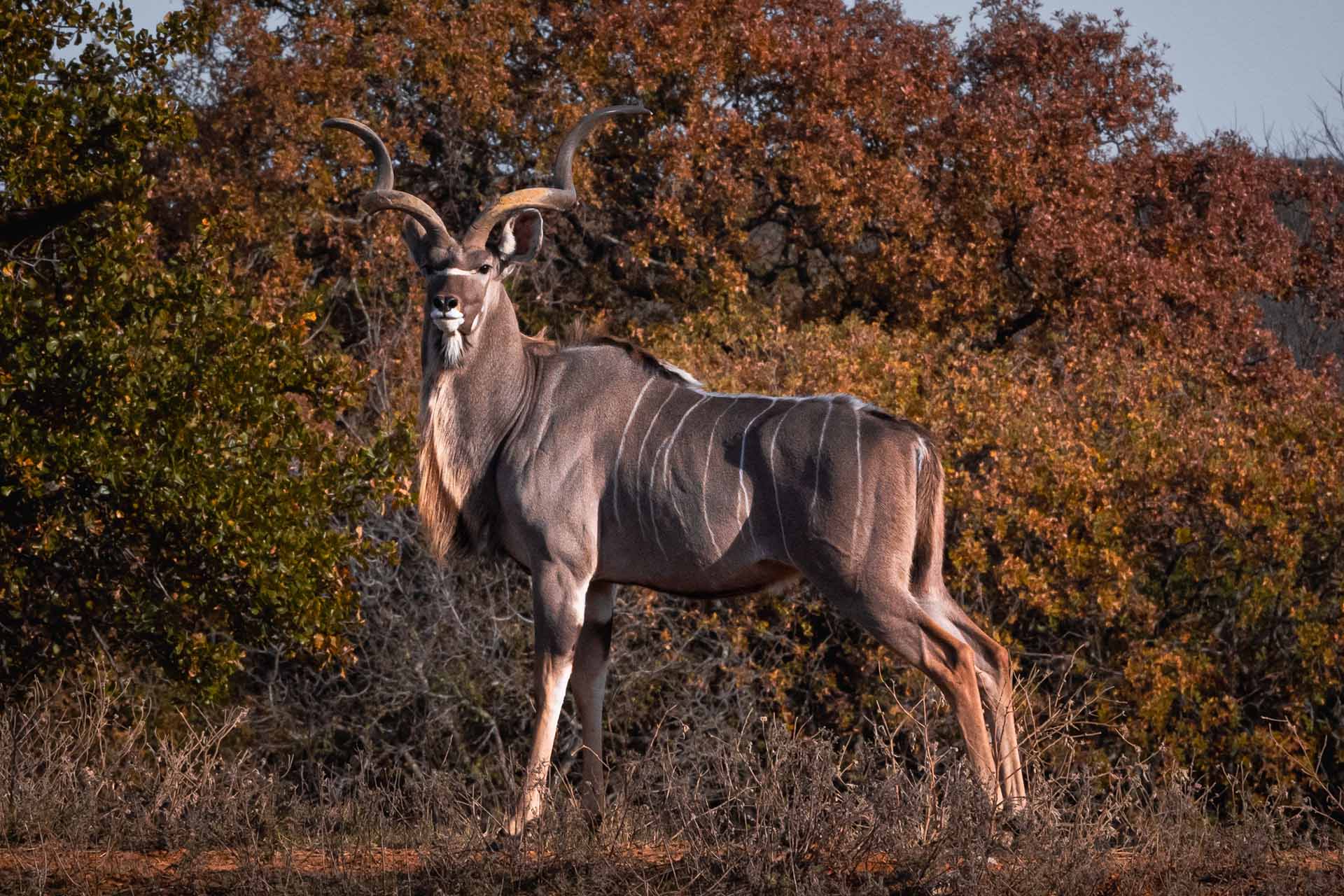
The name “kudu” originates from the Khoikhoi and is believed to mimic the sound of the animal’s hooves as it flees from danger. During the mating season, their necks undergo a mysterious thickening. It’s not entirely understood whether it’s due to hypertrophy or increased blood flow, but it’s speculated to be linked to strengthening the musculature for their horns during the rut. Kudus are renowned for their astonishing jumping prowess. They effortlessly clear a 6.5 feet fence, and even a 9.8 feet barrier poses little challenge. When under stress, these powerful jumpers can soar to heights of up to 11.5 feet. The Greater Kudu stands as the second largest antelope species globally, with only the Eland surpassing it in size. Moreover, Greater kudus boast the most magnificent horns in the animal kingdom. Remarkably, you can gauge the kudu’s age by the number of twists on its horns. The horns begin to grow when the male kudu is between 6-12 months old; they form the first spiral rotation at around 2 years of age and reach the full two-and-a-half rotations at 6 years old.